Unearthing the Secrets of the Inca Empire: A Journey Through Time

webmaster

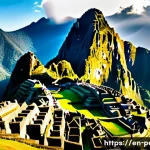
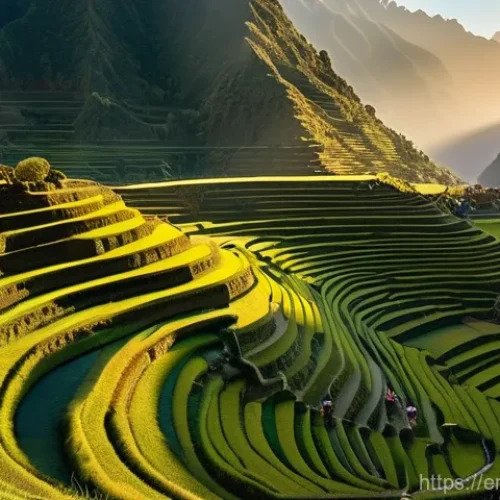
잉카 제국 역사 정리 - **"Inca Engineering Marvel: Andean Terraces at Golden Hour"**
    A panoramic, highly detailed photo...

Have you ever found yourself scrolling through endless feeds, craving something truly profound, something that makes you marvel at human ingenuity? That’s exactly how I felt when I first stumbled deep into the captivating saga of the Inca Empire.

Forget what you think you know from quick history snippets; the Incas were far more than just a powerful Andean civilization. Their story is a breathtaking tapestry woven with threads of advanced engineering, intricate social structures, and an almost mystical connection to the very mountains they called home.

In a world buzzing with AI and digital innovation, there’s an incredible grounding experience in exploring how an ancient civilization, without modern tools, managed to build cities in the clouds, forge an empire across vast, challenging terrains, and develop agricultural techniques that still mystify experts today.

It’s truly mind-blowing when you consider their sophisticated road network, their ingenious terracing, and their unique communication methods. This isn’t just dry history; it’s an exhilarating adventure into a society that mastered resilience, community, and innovation against all odds.

If you’re ready to step back in time and uncover the awe-inspiring legacy that continues to echo through the Andes, you’re in for a treat. Let’s delve in and uncover the incredible story of the Inca Empire together!

Have you ever found yourself completely mesmerized by ancient civilizations, wondering how they pulled off such incredible feats without all our fancy modern gadgets?

I know I have, and nowhere is that feeling stronger than when I dive deep into the world of the Inca Empire. Seriously, these folks were true masters of engineering and innovation, building structures that have stood the test of time and earthquakes!

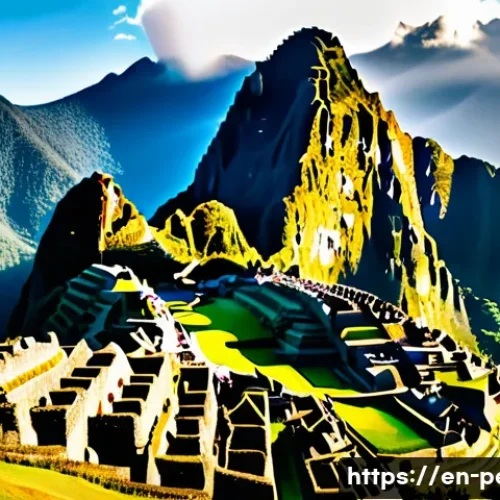
It’s not just about the iconic Machu Picchu, though that place absolutely blew my mind when I visited. Imagine a civilization carving entire cities out of solid rock in impossibly steep terrain, fitting stones together so precisely you can’t even slip a credit card between them.

It’s a testament to their incredible skill and determination. My jaw dropped when I learned how they engineered their structures to withstand the frequent seismic activity in the Andes; they didn’t have steel rebar or advanced computer models, yet their buildings are still standing, often more robust than some of our modern constructions.

The level of detail and foresight they poured into every single project, from monumental temples to everyday homes, just screams ‘expertise.’ It makes you wonder what other secrets they held that we’re still trying to uncover.

Architectural Wonders That Defy Logic

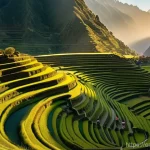
잉카 제국 역사 정리 - **"Inca Engineering Marvel: Andean Terraces at Golden Hour"**
    A panoramic, highly detailed photo...

When you stand before the ancient walls of sites like Ollantaytambo or Sacsayhuamán, you can’t help but feel a profound sense of awe. How did they move those massive multi-ton stones up mountainsides?

What tools did they use to achieve such perfection in their cuts and joints? It’s truly baffling. I remember running my hands over a perfectly smooth, interlocking stone at one of the sites, feeling the sheer scale of the craftsmanship.

It wasn’t just about building; it was about integrating their structures seamlessly into the natural landscape, making it hard to tell where nature ended and human creation began.

This wasn’t just utilitarian construction; it was art, deeply connected to their beliefs and their reverence for the mountains themselves.

Mastering the Land: Ingenious Urban Planning

What’s even more fascinating is how the Incas weren’t just building individual marvels; they were thinking on an empire-wide scale. Their urban planning was incredibly sophisticated, designing entire cities with integrated drainage systems, agricultural terraces, and defensive structures, all while respecting the contours of the land.

It’s a holistic approach that we often struggle to achieve even today. I’ve heard stories from local guides about how their irrigation systems still function in some remote areas, a living testament to their incredible hydro-engineering.

It makes you realize that innovation isn’t just about flashy new tech; it’s about deeply understanding your environment and finding elegant, sustainable solutions that work for centuries.

Life in the Andes: The Intricate Social Tapestry of the Incas

Stepping back into the Inca world, you quickly realize that their achievements weren’t just about grand engineering; they were deeply rooted in a sophisticated and communal social structure.

Imagine a society where everyone had a role, where the concept of ‘community’ wasn’t just a buzzword but the very fabric of daily life. That’s what the Inca Empire felt like to me.

Their social system was incredibly organized, almost like a beautifully choreographed dance where everyone knew their steps and contributed to the greater good.

There was a strong sense of collective responsibility, which I honestly find quite inspiring, especially in our often individualistic world. From the Sapa Inca, their revered emperor, all the way down to the hardworking farmers, each person played a vital part in maintaining the empire’s harmony and productivity.

It wasn’t a free-for-all; it was a carefully balanced system that allowed a vast and diverse empire to thrive for centuries. This kind of societal organization really makes you think about what’s possible when people truly work together.

The Ayllu: Cornerstone of Inca Society

At the heart of this intricate system was the ‘ayllu,’ a basic social unit that was essentially a family or clan group. It was more than just a family; it was a community that owned land collectively, worked together, and supported each other.

I’ve often thought about how comforting that kind of built-in support system must have been. They shared resources, helped each other with farming, and even took care of the elderly and sick.

This strong communal bond ensured that no one was left behind, a philosophy that resonates deeply even today. It wasn’t just about survival; it was about thriving together, learning from each other, and passing down traditions through generations.

A Hierarchy of Service and Responsibility

While it was a communal society, there was definitely a clear hierarchy, but one that came with immense responsibility, especially for those at the top.

The Sapa Inca was not just a ruler; he was considered divine, a descendant of the sun god Inti. Below him were the nobility, administrators, priests, and then the vast majority of the population, the commoners.

Taxes weren’t paid in money but in labor, a system called ‘mita.’ Everyone contributed their labor to state projects, whether it was building roads, working in the mines, or serving in the military.

I remember thinking how efficient this must have been – leveraging the collective effort of millions to build an empire. It wasn’t always easy, I’m sure, but it fostered a shared sense of ownership and purpose that allowed them to achieve such monumental tasks.

It was a fascinating blend of rigid structure and community spirit.

Aspect Description
Sapa Inca The divine emperor, considered a descendant of the sun god Inti. Held ultimate political, religious, and military power.
Coya The empress, often the Sapa Inca’s sister, held significant religious and political influence.
Capac Apu Governors of the four ‘suyus’ or quarters of the empire, reporting directly to the Sapa Inca.
Curaca Local leaders responsible for managing ayllus, collecting mita (labor tax), and maintaining order in their communities.
Ayllu The fundamental social and economic unit, consisting of families or clans who collectively owned land and shared resources.
Mita The system of labor tax where commoners contributed their time and effort to public works, agriculture, and military service.

More Than Just Roads: Connecting an Empire with Ingenuity

Honestly, when I think about the Incas, my mind often jumps to their incredible road network, the Qhapaq Ñan. It wasn’t just a few pathways; we’re talking about an almost 25,000-mile system that crisscrossed mountains, deserts, and jungles, connecting every corner of their vast empire.

To put that into perspective, imagine building something like that today, with all our modern machinery! It’s absolutely mind-boggling. I’ve hiked small sections of what’s left of these trails, and even today, they’re breathtakingly well-preserved and expertly designed.

They weren’t just flat paths either; they included intricate stairways carved into cliffsides, tunnels through mountains, and those famous suspension bridges woven from natural fibers that swung precariously over raging rivers.

It wasn’t just about getting from point A to point B; it was about conquering some of the most challenging terrain on Earth, all to maintain control and communication across their immense territory.

This level of logistical planning and engineering truly highlights their genius.

The Swift Feet of the Chasquis

One of the coolest aspects of the road network was its human element: the ‘chasquis.’ These were specialized, highly trained runners who acted as the empire’s postal service and messengers.

They ran in relays, covering incredible distances at high speeds, carrying messages and even fresh fish from the coast up to the emperor in the highlands.

Can you imagine the sheer endurance and dedication these individuals had? I’ve often thought about what it must have been like to see a chasqui sprinting past, knowing they were carrying vital information that could shape the destiny of the empire.

It wasn’t just a delivery service; it was the nervous system of the Inca state, enabling rapid communication and swift responses to any situation, whether it was a rebellion or a natural disaster.

Bridges That Dared to Span the Impossible

And those bridges! The Inca knew that simply building roads wasn’t enough; they needed to overcome the countless gorges and canyons of the Andes. Their solution?

Ingenious suspension bridges made from woven plant fibers. These weren’t just crude ropes; they were carefully engineered structures, often rebuilt annually as a community effort, a testament to their collective spirit and engineering prowess.

I’ve seen historical recreations and photos, and they look incredibly daunting, yet they supported entire armies and llama caravans. The fact that an ancient civilization figured out how to build such sturdy, long-spanning bridges without any metal or modern tools truly underscores their innovative spirit and deep understanding of materials and mechanics.

Advertisement

Farming the Mountains: Inca Agriculture That Still Amazes

When you think of farming, you probably picture flat, open fields, right? Well, the Incas took that concept and threw it right out the window, instead transforming impossibly steep mountain slopes into fertile farmlands.

It’s truly a marvel to behold their agricultural terraces, known as ‘andenes,’ carved into the hillsides. When I first saw them, they looked like gigantic, emerald green staircases ascending to the heavens.

These weren’t just pretty steps; they were highly sophisticated, self-sustaining ecosystems. The Incas literally reshaped their environment to feed millions, and they did it with an understanding of soil, water, and climate that feels almost futuristic.

This wasn’t just about survival; it was about thriving in a challenging environment and proving that with ingenuity, you can make the impossible possible.

Their agricultural techniques are still studied today, and some are even being re-implemented in modern permaculture.

Terracing: The Genius of the Andenes

The ‘andenes’ were much more than just dirt steps. Each terrace was carefully constructed with a complex layered

Hydraulic Mastery: Watering the Peaks

And how did they water these vast terraced fields up in the mountains? Through incredibly sophisticated irrigation systems. They built canals, aqueducts, and reservoirs, often channeling water for miles from mountain springs and glacial melt, gravity-fed directly to their fields.

I’ve seen some of these ancient channels still carrying water, a testament to their enduring quality. They were experts in water management, preventing floods during heavy rains and ensuring a steady supply during dry seasons.

This control over water resources was crucial for their agricultural success and showcases another facet of their remarkable engineering skills. It’s a powerful reminder that sometimes the oldest solutions are the most effective.

Whispers of the Past: Unlocking Inca Communication Secrets

In a world buzzing with instant messages and digital communication, it’s almost hard to imagine an empire as vast and organized as the Inca’s thriving without a written language.

But thrive they did! The Incas had a unique and utterly fascinating way of recording information and communicating across their vast territory: the ‘quipu.’ When I first heard about it, I admit I was a bit skeptical.

How could knotted strings possibly convey complex messages, historical records, or even census data? But the more I delve into it, the more I’m convinced of its sheer brilliance and complexity.

It’s a stark reminder that communication isn’t just about letters and words; it can take on incredible, unexpected forms that challenge our modern perceptions.

The fact that we still haven’t fully deciphered all its secrets only adds to its mystique and my personal fascination.

The Enigma of the Quipu

Imagine a collection of cotton or alpaca strings, dyed in various colors, with different types of knots tied at various positions. That’s a quipu in its simplest form.

But don’t let its simplicity fool you. Each string, color, knot type, and position could convey different types of numerical and possibly even narrative information.

Scholars have largely deciphered the numerical quipu, revealing complex accounting and census data. I’ve often tried to picture an ‘quipucamayoc,’ an Inca record-keeper, meticulously creating and interpreting these intricate arrays of knots, essentially “reading” history or economics from a bundle of strings.

It’s an intellectual challenge and a testament to human cognitive capacity, a truly unique form of data storage that predates our digital age by centuries.

Oral Traditions: The Living Archive

While the quipu served as a robust system for quantitative data, much of the Inca’s rich history, mythology, laws, and customs were passed down through generations via oral traditions.

This wasn’t just casual storytelling; it was a highly formalized process. Special individuals were trained to memorize and recite epic poems, historical accounts, and religious narratives with incredible accuracy.

I’ve heard stories about how these oral historians could recall vast amounts of information, almost like living libraries. This reliance on spoken word highlights the importance of memory, mentorship, and community in their culture.

It makes me reflect on how much we lose when we rely solely on written records, sometimes overlooking the nuanced beauty and emotional depth that only a spoken narrative can truly capture.

Advertisement

The Sun’s Chosen People: Spirituality and Ritual in the Inca World

Beyond their incredible engineering and social structures, what truly captivated me about the Incas was their profound spiritual connection to the world around them.

For them, every mountain, every river, every celestial body held a sacred significance. It wasn’t just a belief system; it was an all-encompassing way of life, deeply interwoven with their daily existence, their agricultural cycles, and their very understanding of the cosmos.

I often find myself thinking about how deeply they respected and revered nature, seeing themselves not as conquerors of the land, but as integral parts of a larger, living universe.

This holistic worldview, especially their reverence for the sun and the earth, truly resonates with me and offers a powerful contrast to some of our more detached modern perspectives.

Inti: The Guiding Light

At the pinnacle of their pantheon was Inti, the sun god, considered the divine ancestor of the Sapa Inca. The sun wasn’t just a celestial body; it was the giver of life, warmth, and agricultural bounty.

You can see this reverence reflected in their architecture, with many temples, like the Coricancha in Cusco, meticulously aligned to capture the sun’s rays during solstices.

I remember imagining the spectacle of the Inti Raymi festival, a vibrant celebration of the sun god, with its elaborate rituals, sacrifices, and dances, meant to ensure the sun’s return and the fertility of the land.

It must have been an absolutely breathtaking experience, a true communion between humanity and the divine, fostering a deep sense of gratitude and connection to the natural cycles.

Pachamama and the Sacred Landscape

Equally important was Pachamama, the Earth Mother, who personified fertility, abundance, and the mountains themselves. The Incas believed that Pachamama provided sustenance and life, and they offered her respect and gratitude through rituals and offerings.

Every time they planted crops, built a new structure, or simply took from the land, they would offer prayers and small gifts to Pachamama, asking for her blessing and showing their appreciation.

This deep ecological awareness, this understanding that they were part of a living landscape that provided for them, is something I find incredibly poignant.

It’s a powerful lesson in reciprocity and sustainable living, a reminder that we are all interconnected with the earth beneath our feet.

Legacy Etched in Stone: Enduring Lessons from the Inca Empire

As I reflect on the incredible journey through the Inca Empire, I’m constantly struck by the sheer resilience and ingenuity of this ancient civilization.

It’s not just about the impressive ruins that stand today, or the captivating stories of their engineering prowess; it’s about the profound lessons their legacy offers us, even in our hyper-modern world.

For me, the Incas exemplify what it means to truly innovate, not by always seeking the newest gadget, but by deeply understanding their environment and community, and crafting solutions that were sustainable, effective, and profoundly integrated into their way of life.

They managed to build and sustain an empire that spanned diverse and challenging landscapes, all while fostering a powerful sense of community and shared purpose.

This isn’t just dry history; it’s a vibrant, living story that continues to echo through the Andes, offering timeless wisdom if we’re willing to listen.

Sustainability Before It Was a Buzzword

One of the most powerful takeaways for me is the Incas’ inherent understanding of sustainability. They didn’t just exploit resources; they managed them with foresight and respect.

Their agricultural practices, particularly the terracing, demonstrate a deep commitment to soil conservation and water management that ensured productivity for generations.

They lived in harmony with their environment, adapting to it rather than trying to overpower it. This long-term thinking, this consideration for future generations, is a stark contrast to some of the short-sighted practices we see today.

I often think about how much we could learn from their integrated approach to resource management and living in balance with nature.

The Power of Community and Collective Effort

Another resounding lesson is the strength of community. The ‘ayllu’ system and the ‘mita’ labor contributions highlight how a strong, cohesive society can achieve monumental feats.

It wasn’t about individual glory but about collective well-being and shared responsibility. Imagine what we could accomplish if we truly embraced that level of cooperation and mutual support.

The Incas remind us that sometimes, the most complex problems are best solved through collaborative effort and a shared vision, where everyone contributes their unique skills for the common good.

Their story is a powerful testament to the human spirit’s ability to overcome challenges and build something truly extraordinary when united by a common purpose.

Advertisement

Wrapping Up Our Inca Journey

And there you have it, folks! Diving into the Inca Empire truly feels like stepping into a time machine, doesn’t it? Every time I explore their incredible achievements, I’m left with an overwhelming sense of respect for their ingenuity, their profound connection to nature, and the sheer power of their collective spirit. It’s a powerful reminder that human potential knows no bounds, even without the tech we rely on today. From their gravity-defying architecture to their intricate social tapestry and their revolutionary approach to agriculture, the Incas weren’t just building an empire; they were crafting a sustainable, deeply interconnected world. Their legacy isn’t just etched in stone; it’s a living testament to what can be achieved when innovation, community, and respect for the environment come together in perfect harmony. I hope this deep dive has inspired you as much as it has me to look a little closer at the ancient wonders that still whisper tales of greatness. Keep exploring, keep questioning, and keep letting history ignite your imagination!

Handy Facts for Your Next Deep Dive into Inca History

1. The Inca Empire, at its height, was the largest empire in pre-Columbian Americas, stretching over 2,500 miles along the western coast of South America, truly a vast and diverse territory.

2. Despite their monumental achievements, the Incas never developed a formal writing system, relying instead on the intricate ‘quipu’ for record-keeping and a rich oral tradition to pass down their history and knowledge.

3. Their architectural precision was so legendary that many Inca structures have withstood countless earthquakes over centuries, thanks to their innovative dry-stone masonry techniques that allowed stones to move slightly during seismic activity.

4. The ‘mita’ system was not just a labor tax; it was a foundational social contract where citizens contributed work to state projects, fostering a strong sense of community and ensuring the empire’s infrastructure and resources thrived.

5. While Machu Picchu is their most famous site, cities like Cusco, the Inca capital, and Ollantaytambo offer equally breathtaking examples of their engineering and planning prowess, showcasing their adaptability to diverse Andean landscapes.

Advertisement

Key Takeaways from the Inca World

What I’ve really taken to heart from my journey through the Inca Empire is that true innovation often comes from a deep understanding of one’s environment and an unwavering commitment to community. It’s not just about building big; it’s about building smart, sustainably, and with a shared purpose. Their dedication to self-sufficiency, their respect for Pachamama, and their ability to orchestrate collective efforts to achieve seemingly impossible feats are lessons we can all carry into our modern lives. They remind us that resourcefulness, adaptability, and strong social bonds are truly timeless keys to success, proving that some of the greatest wisdom can be found by looking back, even as we strive to move forward.

Frequently Asked Questions (FAQ) 📖

Q: How on earth did the Incas manage to build such breathtaking cities and complex structures like Machu Picchu, high up in the mountains, without any modern machinery or even the wheel?

A: Oh, this is a question that always sparks my curiosity, and honestly, it still blows my mind! When I first learned about the Inca’s architectural prowess, I couldn’t wrap my head around it.
Imagine building an entire city, perfectly fitted with massive stones that even a credit card couldn’t slip between, all at an altitude where just walking can leave you breathless!
What I’ve found, and what truly makes their engineering stand out, is their incredible understanding of their environment and their sheer ingenuity. They weren’t just stacking rocks; they were master masons who developed a technique called ashlar masonry, where they precisely cut and shaped stones to fit together without mortar.
It’s like a giant, super-strong jigsaw puzzle! I remember seeing photos of the intricate stone walls, and thinking, “How did they even lift those enormous blocks?” It’s believed they used a combination of ramps, levers, and sheer manpower, often rolling the stones over logs and then meticulously positioning them.
Beyond just the building, their terracing for agriculture, like the incredible Moray terraces, shows an equally advanced grasp of irrigation and microclimates.
It’s not just about strength; it’s about an almost intuitive connection to the land and a deep, deep knowledge passed down through generations. Honestly, every time I think about it, I feel a surge of respect for their incredible resilience and innovation.
It makes you realize just how much we can achieve with collaborative effort and an unbreakable spirit.

Q: With an empire stretching across such vast and challenging terrains, how did the Incas manage to communicate and keep records without a written language like we understand it?

A: This is another one of those Inca mysteries that just fascinates me to no end! When I first learned they didn’t have a traditional written language, I immediately wondered, “So how did they govern such a massive empire and keep track of everything?” The answer, which is so uniquely Inca, lies in something called the quipu.
It’s not a scroll or a tablet; it’s a series of knotted strings, made from cotton or llama wool, where the type of knot, its position, and the color of the string all held specific meaning.
Think of it like a three-dimensional spreadsheet or a coded message that only trained quipucamayocs (quipu keepers) could read and interpret. From what I’ve gathered, these quipus recorded everything from census data and tax records to historical accounts and astronomical observations.
It truly astonishes me how they developed such a complex and efficient system that relied entirely on memory and specialized knowledge. I’ve always found it so intriguing how different cultures develop totally different solutions to similar problems.
Imagine trying to learn how to “read” a quipu today! It really underscores their incredible organizational skills and their unique approach to information management.
It makes you reflect on the diverse ways humanity has found to share stories and knowledge, even without pen and paper.

Q: What was daily life like for the average person in the Inca Empire, and how did their social structure influence their way of living?

A: Ah, stepping into the shoes of an ancient Incan! This is where you really get a feel for the soul of their society. From what I’ve explored, daily life for most Incas revolved heavily around agriculture and community, all within a very structured social system.
At the heart of it was the ayllu, which was essentially a family unit or a community group that shared land and responsibilities. Everyone had a role to play, and cooperation was key.
I often think about how different that must have felt from our individualistic societies today. Most commoners, or puric, spent their days farming potatoes, maize, and quinoa on those ingenious terraces we talked about.
There was a strong sense of communal work, known as mita (not to be confused with the forced labor of other empires; this was a reciprocal service to the state for public works projects, and often rotated).
They also had amazing textiles, and weaving was a highly valued skill. Their diet was pretty healthy, focusing on plant-based foods, and they even enjoyed chicha, a fermented corn beverage.
What I find truly fascinating is how this structured social system, with the Sapa Inca (the emperor) at the top, down through nobles, priests, and then the common people, fostered a sense of order and shared purpose.
It wasn’t about accumulating personal wealth in the same way we think of it today; it was more about contributing to the collective good of the empire.
It just paints such a vivid picture of a society deeply connected to its land, its community, and its traditions.